Introduction
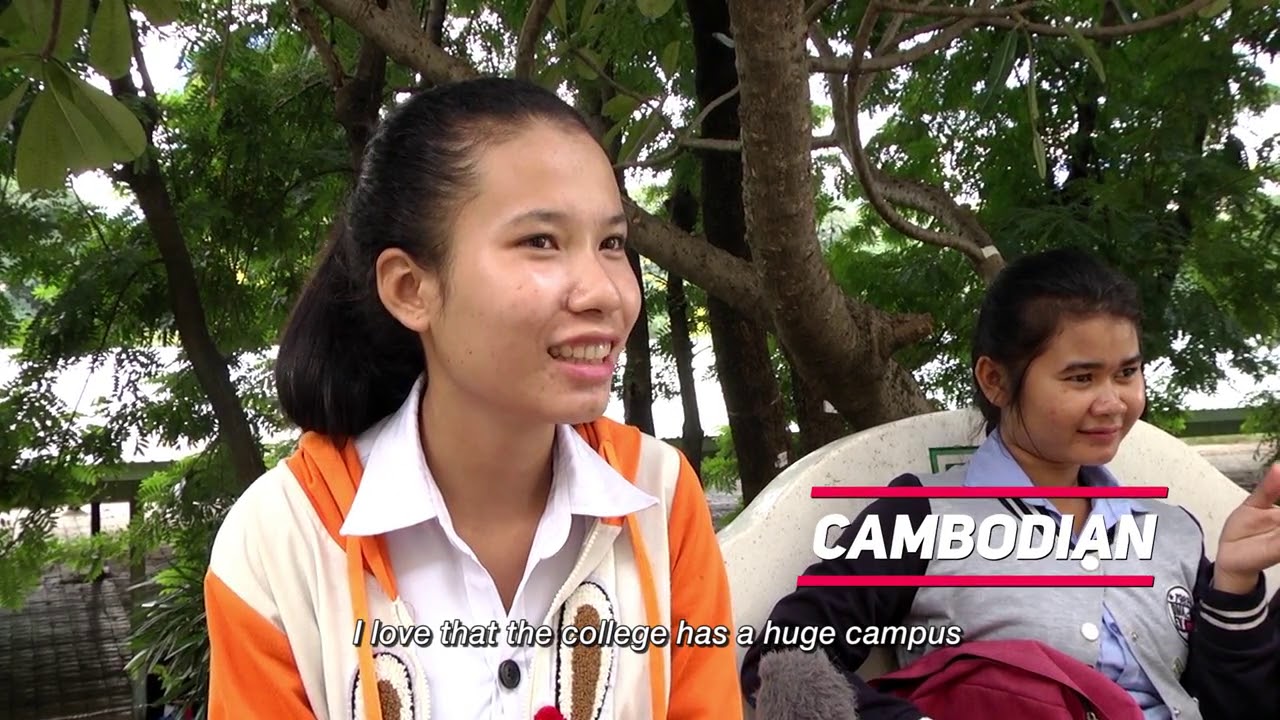
The Royal University of Phnom Penh (RUPP), founded in 1960, has undergone a series of transformations to become the leading national university in Cambodia. Other transformations are still happening. In the last five years, for example, Rupp has made considerable progresses in many areas including organizational structure, institutional governance, capacity building, infrastructure development, research, teaching and learning, curriculum development, and quality assurance. These achievements have encouraged RUPP management and faculty to strive harder to implement the institutional reform and achieve development goals.
Today, RUPP is a leading institution in Cambodia, serving approximately 30,000 students across its Bachelor's, Master's, and Doctoral programs. Annually, RUPP graduates around 5,000 students from its five faculties including Science, Social Sciences and Humanities, Engineering, Education, and Development Studies, two institutes such Foreign Language Institute - IFL, Institute of International Studies and Public Policies, and the Graduate School of Science. The university also hosts two internal centers, including the National Incubation Center of Cambodia (NICC), the University-Industry Cooperation Center (UICC), and two other international cooperation centers: the Cambodia-Japan Cooperation Center (CJCC) and the Cambodia-Korea Cooperation Center (CKCC).
RUPP is committed to producing human capital of quality to ensure economic resilience to achieving the Cambodian vision of 2030 to become an upper-middle-income country and 2050 to become a high-middle-income and developed country.
Vision
Our vision is to be Cambodia’s flagship university with regional standing in teaching and learning, research and innovation, and social engagement by 2030.
Mission
Our vision is to be Cambodia’s flagship university with regional standing in teaching and learning, research and innovation, and social engagement by 2030.
- Equipping students with the essential knowledge, skills, competence, values, and attitudes required by the information- and knowledge-based society
- Providing high-quality research and innovations; and
- Being actively engaged with society.
Goal

GOAL 1: TEACHING AND LEARNING IMPROVEMENT
GOAL 2: RELIABLE RESEARCH CAPABILITY
GOAL 3: GOOD GOVERNANCE
GOAL 4: RESOURCE ADEQUACY AND SUSTAINABILITY
GOAL 5: CENTERS OF EXCELLENCE
Core Value: CARE
- Creativity and Innovation
- Academic Freedom
- Responsibility
- Excellence
MOTTO
Recognize and Unlock People’s Potentials (RUPP)
Organization Culture
Mutual Respect and Recognition : All RUPP staff and key stakeholders are expected to uphold high ethical standards in professional education. This includes recognizing each other's potential, creativity, excellence, and commitment to national interests.
Collectivism and Sustainability : RUPP emphasizes accountability and active participation from its staff and stakeholders in all operational activities and decision making. This approach, rooted in accuracy, honesty, and professional ethics, is considered fundamental to the institution's development and spirit, ensuring its long-term sustainability.
Accountability : RUPP staff and stakeholders must perform their roles with responsibility and transparency. This is crucial for achieving the highest levels of efficacy, effectiveness, and ownership in a sustainable manner, with detailed activity plans outlining specific responsibilities and expected outcomes.
History
The Royal University of Phnom Penh first opened its doors as the Royal Khmer University on January 13, 1960, with a National Institute of Judicial and Economic Studies, a Royal School of Medicine, a National School of Commerce, a National Pedagogical Institute, a Faculty of Letters and Human Sciences, and a Faculty of Science and Technology. The language of instruction during this period was French.
With the establishment of the Khmer Republic, the Royal Khmer University became the Phnom Penh University. Between 1965 and 1975 the university consisted of the Ecole Normale Supérieure, the Faculties of Letters and Humanities, Science, Pharmacy, Law and Economics, Medicine and Dentistry, Commerce, Pedagogy and the Language Institute.
Between 1975 and 1979, the Khmer Rouge regime forced the cessation of formal education. Schools and universities were closed and destroyed, and teaching services decimated. Along with all other educational institutions in Cambodia, Phnom Penh University ceased to function during this time. The Khmer Rouge targeted the educated, and many of the University’s faculty members were killed. Of the educated people who survived the regime, few chose to remain in Cambodia once its borders reopened. Deserted for almost five years, the campus became another victim of the grim period during the Pol Pot regime.
In 1980, the Ecole Normale Supérieure reopened, again teaching predominantly in French. The following year saw the opening of the Institute of Foreign Languages (IFL), initially training students to become Vietnamese and Russian language teachers. Both colleges focused on training students to become teachers, thus rebuilding the education system within Cambodia.
In 1988, the Ecole Normale Supérieure merged with the IFL to create Phnom Penh University. In 1996, the university underwent its final change of name, becoming the Royal University of Phnom Penh.
During the past decade, the University has continued to grow and now includes the Faculty of Science, Faculty of Social Sciences and Humanities, and the Institute of Foreign Languages. New departments and degree programs are developed regularly to keep up with the changing needs of Cambodian society. In keeping with its commitment to higher education, RUPP began to develop postgraduate degrees at a Masters level since 2001.